TLDR
Jev is a model that answers questions with a fixed set of possible answers. You hand it a question - “is this spam?”, “which team should handle this?”, “how urgent, 1 to 5?” - and it hands back the answer plus how sure it is. In milliseconds, for a fraction of a cent. It never writes an essay.
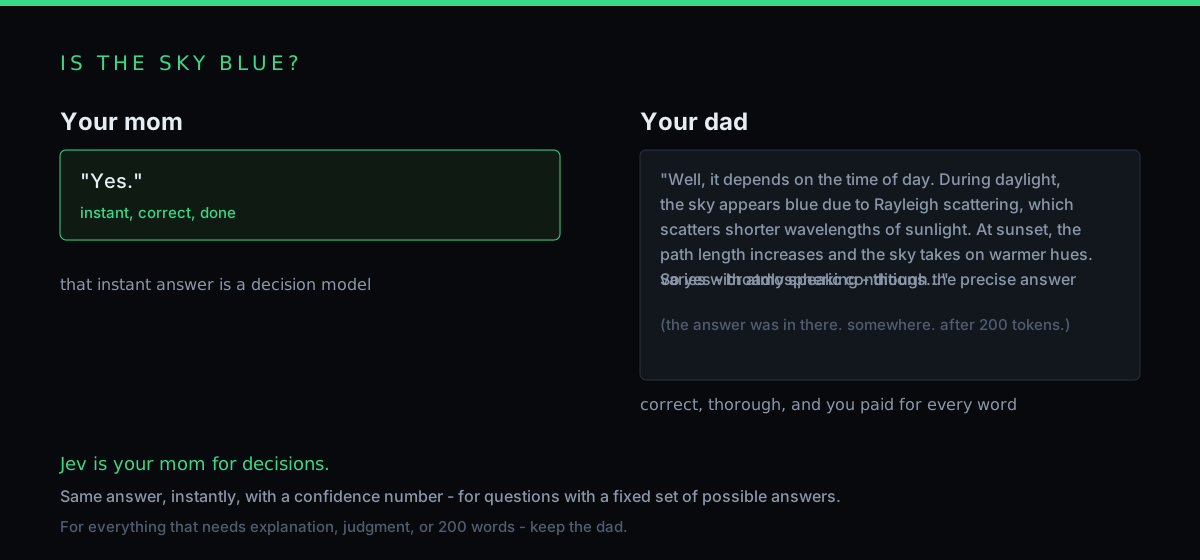
The best explanation of the whole category came from a reply on X: asking your mom if the sky is blue gets an instant “yes.” Asking your dad gets a 200-word essay on Rayleigh scattering. Both are correct. Jev is your mom for decisions.
The one-sentence version
Jev answers questions that have a known set of possible answers, instantly, with a confidence number attached.
If you want the programmer version, a reply on the same thread nailed it: “Jev is a smart if statement.” It looks at your input, checks it against the answers you predefined, and commits to one.
What you actually do with it
Take a support inbox. Every ticket that arrives needs three judgments: which team handles it, how urgent it is, and whether the customer is about to cancel. Today most companies pay a chat model to write a paragraph for each ticket, then read the paragraph to find the answer.
With Jev you ask the three questions directly:
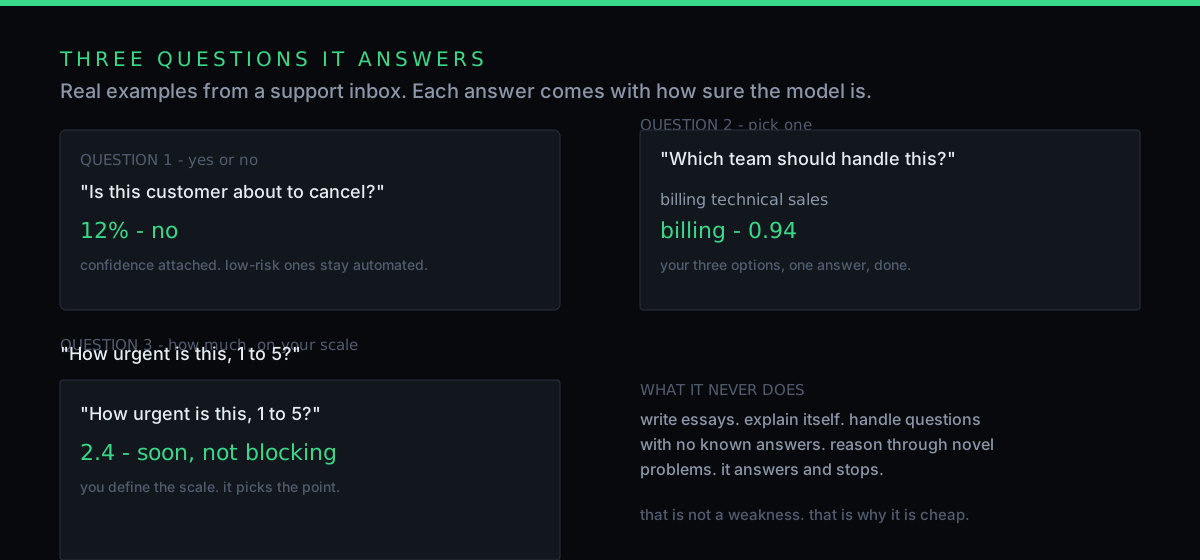
Three questions, three answers, each with a confidence score. The model never writes anything.
- “Is this customer about to cancel?” - back comes “12 percent, no”
- “Which team: billing, technical, or sales?” - back comes “billing, 0.94”
- “How urgent, 1 to 5?” - back comes “2.4, soon but not blocking”
Every answer includes how sure the model is. Route the unsure ones to a human, act on the confident ones automatically.
Why it is cheap
A chat model earns its price when a question needs an essay. For “spam or not,” you are paying it to compose sentences you will throw away the moment you extract the one word you needed.
Jev has no sentences to compose. The possible answers are part of the question. It picks one and reports its confidence - a few hundred tokens in, zero out. That is the whole bill.
When not to use it
Jev cannot reason through problems it has never seen, explain its answer, write anything, or handle questions with no known answer set. Ask it “why is the sky blue?” and you want your dad back. Ask it anything where the options are known and the volume is high, and the dad is the expensive one.
The family
Three exist as of this week:
- Jev - TypeSafe’s hosted model, $0.042 per million input tokens, output free
- OpenJev - the open reproduction that runs in a browser tab on a phone (openjev.com)
- Laya - an independent open model, 100+ languages, 33 milliseconds, Apache 2.0
A full technical breakdown - benchmark tables, the three-model comparison, what they replace - is in the main Jev guide. If you want the story of what this category did to the model-router startups, that is here.
Sources: the TypeSafe Jev launch, Mayank Gulati’s mom/dad thread, David Hill’s if-statement line, and the benchmark tests linked in the main guide.
Sources verified September 2026.
Discussion
Be the first to commentStart a discussion
Got a take on this, a rig to show off, or a benchmark that says otherwise? Sign up and start the thread - your comment publishes instantly once you're in.