The lawsuit
ChangXin Memory Technologies (CXMT), China’s largest DRAM maker, has filed suit against the US Department of Defense in the US District Court for the District of Columbia, seeking removal from the Pentagon’s Section 1260H list of alleged “Chinese military companies.” A widely shared post from Pirat_Nation (@Pirat_Nation, 20.8K views) framed the core of the complaint: CXMT says its memory chips are standard civilian products built to JEDEC specifications, that it spent more than a year supplying information to challenge the designation, and that the Pentagon briefly indicated it would remove the company from the list before withdrawing that decision the same day.
View this post on X →
The defendants go to the top: the DoD, Defense Secretary Pete Hegseth, Deputy Secretary Steve Feinberg, and the assistant defense secretary overseeing industrial base policy. CXMT argues the designation was arbitrary, lacked evidentiary support, and violated due process.
The timeline: listed, nearly unlisted, relisted
The designation history reads like a whiplash case study. CXMT was first designated under Section 1260H in January 2025 under the Biden administration. In February 2026 the Pentagon published a removal notice - then pulled it the same day. On June 8, 2026 the Pentagon relisted CXMT alongside fellow Chinese flash maker YMTC, in a list of 188 entities. The lawsuit followed in late August 2026, days after CXMT beat Samsung and SK Hynix to market with LPDDR6 mass production.
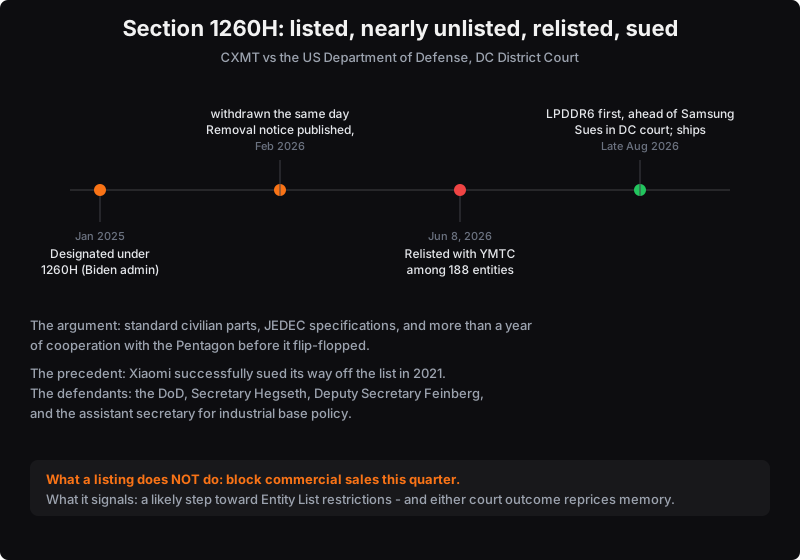
It is worth being precise about what 1260H does and does not do: a listing blocks defense contracts (with a 2027 compliance window under recent law) and flags the company to investors, but it does not restrict commercial sales. The reason companies fight it so hard is that it is widely read as a precursor to Entity List trade restrictions - the difference between an investor warning and losing access to US equipment, software, and customers.
Why CXMT fights the way Xiaomi did
CXMT joins a line of Chinese firms - Alibaba, WuXi AppTec, Hesai, DJI - that have sued the Pentagon over blacklists, with a precedent behind them: Xiaomi successfully sued its way off the list in 2021, and courts have been willing to scrutinize the government’s evidence in these cases. CXMT is now China’s most valuable listed company after its Shanghai IPO and is the supply-side wildcard in the memory-shortage story we covered in SK Hynix’s 2030 shortage forecast, so it has both the resources for a long case and the incentive to contest it. Designation makes Western customers think twice long before any enforcement lands, and it raises the cost of a fourth memory supplier’s emergence in exactly the same way export-control moves around open weights raise the cost of Chinese model capability going global.
What it means for people buying memory
The commercial math does not change this quarter: CXMT parts ship to Chinese customers first, and the 1260H list does not restrict sales. But the fight is a leading indicator for the memory supply story through 2030. If CXMT prevails - or if commercial momentum keeps expanding its overseas reach - the DRAM price curve that Kwak Noh-jung called flat through 2030 gets a second author. If the designation escalates toward the Entity List, the wildcard closes instead. Watch the court docket the same way you watch RAM prices: either outcome reprices the rigs matched by the rig finder and the memory inside the catalog’s models.