The statement
SK Hynix CEO Kwak Noh-jung said on August 27, 2026 that the memory shortage could persist through the end of 2030, with no clear signs of a downturn: nobody knows exactly how long the tight period runs, but “there are no visible signs of a downturn yet” is the direct quote, and past 2030 he expects demand to slow or plateau rather than collapse. The comment came at a press Q&A after the groundbreaking for SK Hynix’s advanced AI-memory packaging site at Purdue University in Indiana, and a widely shared post from Jukan (@jukan05, 122.9K views) pushed the soundbite to a mass audience the next day.
View this post on X →
Why this cycle is different, in his telling
The structural change Kwak pointed to is the shift from commodity to committed supply: SK Hynix’s business is moving from 100% standard products toward partially or fully customized ones - read: HBM and custom AI-memory contracts with datacenter buyers - so supply is increasingly aligned to real demand, and any future downturn should be shallower than the DRAM crashes of past decades. The Purdue facility being built is dedicated to exactly that advanced-packaging work, and he added SK Hynix is open to further US investment wherever power, funding, and subsidies line up.
What a five-year squeeze means for local-AI buyers
This site has already been living inside that squeeze for a year, and the receipts read the same way Kwak’s forecast does:
- The DGX Spark launched around $4,000 in October 2025 and was at roughly $4,700 by February 2026, blamed on LPDDR5X shortage.
- Apple pulled the M3 Ultra Mac Studio’s 512GB and then 256GB configs from sale in 2026 - capacity went to HBM for AI servers - leaving a 96GB top with 13-14 week lead times, until the M5 Ultra landed as the replacement.
- A community-built Epyc + DDR4 rig for 235B-class MoE was quoted at about $2,400 before the server-RAM spike, with comparable RAM alone near $1,600+ afterward.
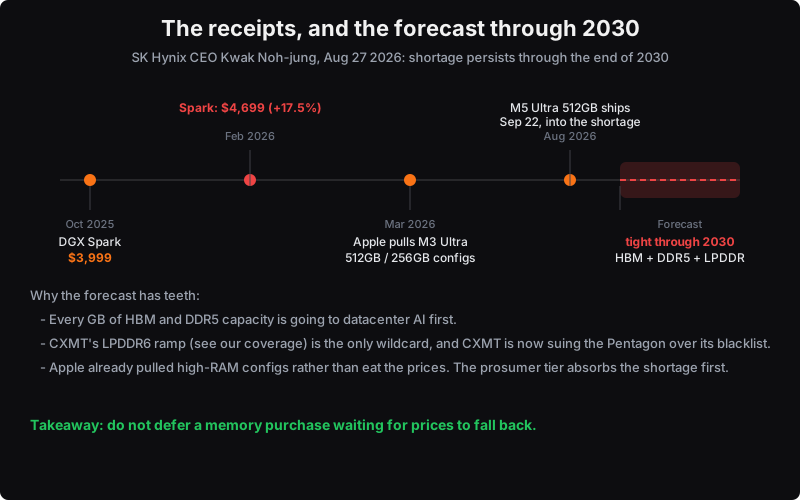
The update Kwak is making is horizon, not direction: prices pulled out of your reach and configs pulled from sale are not a 2026 blip with recovery coming in 2027. If the shortage genuinely runs through 2030, the planning rules change: do not defer a memory purchase waiting for prices to fall back - the pre-shortage prices may simply not return this decade - and treat any in-stock large-memory config as worth buying the week you can afford it.
The supply-side wildcard lands with China’s CXMT starting LPDDR6 mass production: a fourth, rapidly scaling supplier is the one force that could flatten Kwak’s curve. We will track whether new capacity shows up in consumer prices; the model catalog and the rig finder price and match hardware as it stands today, and every price on this site should still be verified at purchase time.