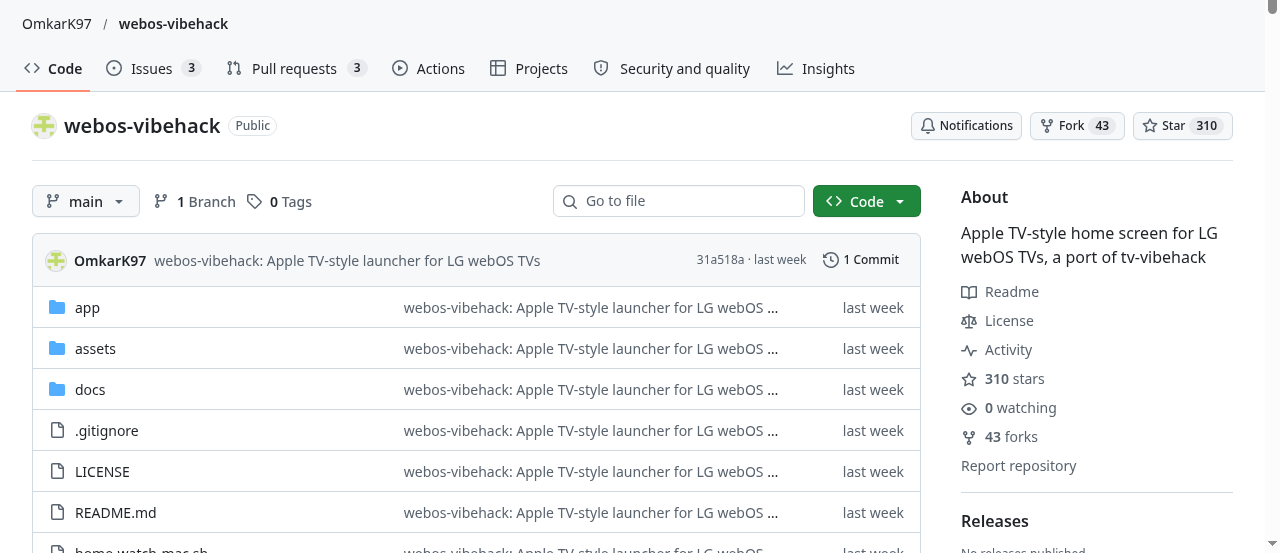
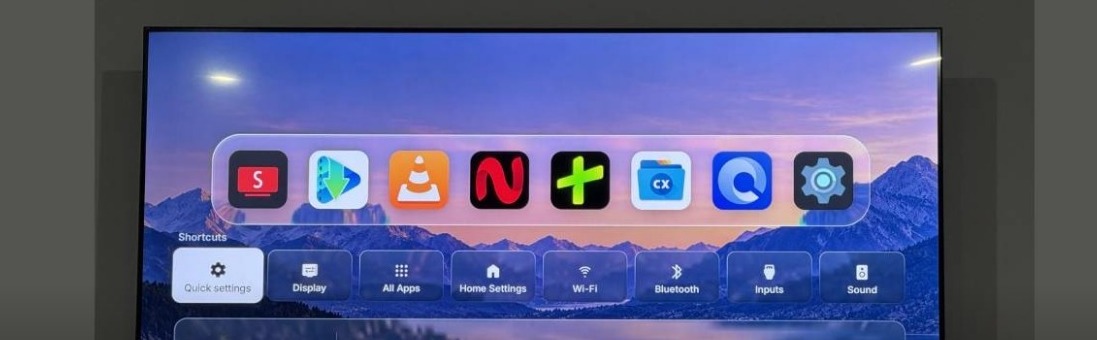
Smart TVs got bad enough that people started running a coding agent against their own television. The tool that emerged first has 318 stars on GitHub - tv-vibehack, “reverse-engineer any Android TV / Google TV” - and a sibling for LG sets, webos-vibehack (310 stars, “Apple TV-style home screen”). The pitch: connect over ADB, no root, and let an AI agent strip launchers, remap the remote’s sponsored buttons, and take the ads out. Two weeks ago this was a curiosity. By Sunday it had a policy fight attached.
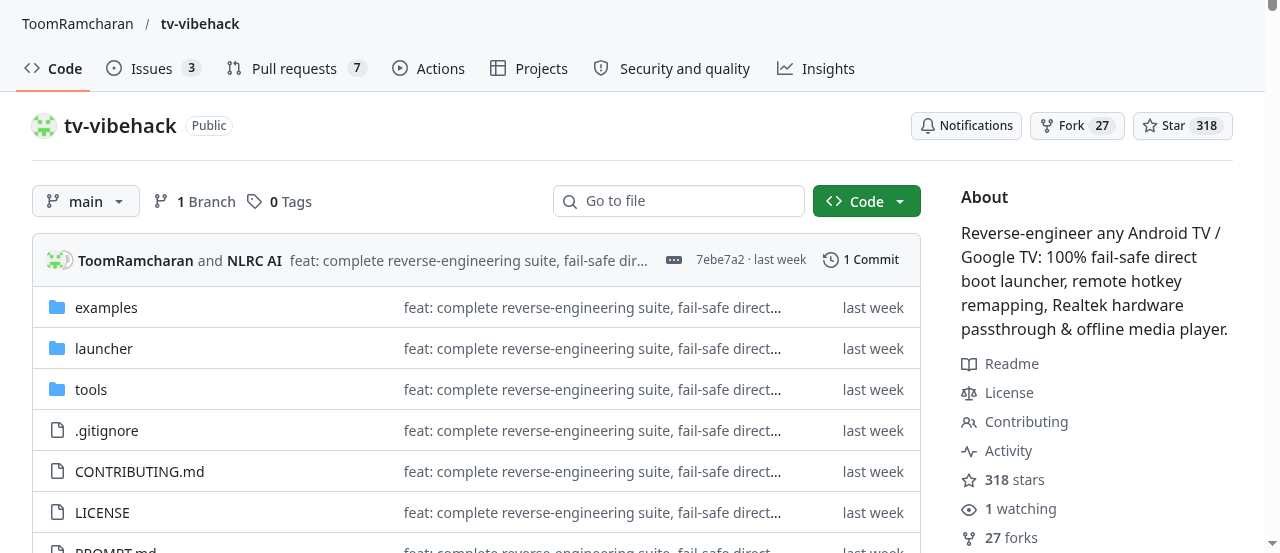
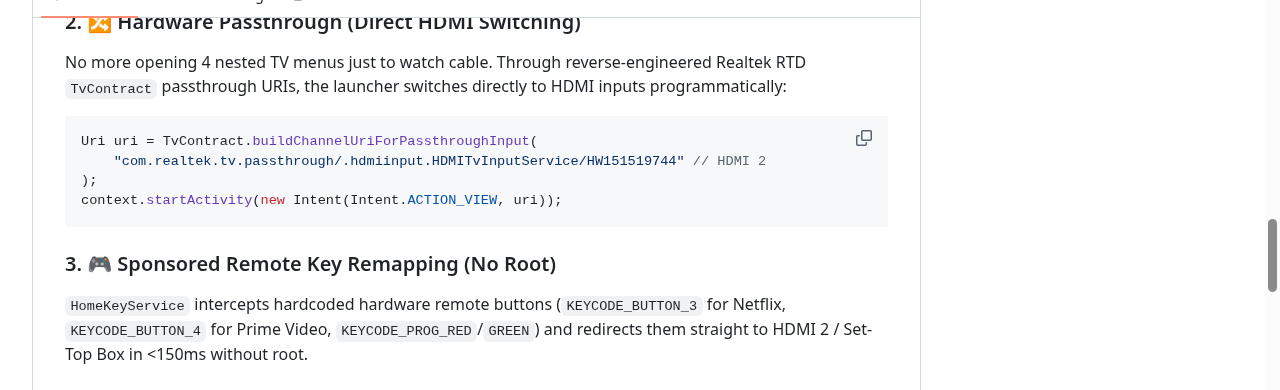
The README’s feature list is concrete enough to evaluate. The sponsored-remote interception might be the most relatable: the remote’s Netflix button (KEYCODE_BUTTON_3) and Prime Video button (KEYCODE_BUTTON_4) are hardcoded at the OS level, and tv-vibehack’s HomeKeyService intercepts the keypress and redirects it - to a live TV input or the launcher - in under 150ms, advertised as no-root. There’s a Revert-anything path (the launcher is replaced but boot stays fail-safe), Realtek passthrough URIs for direct HDMI switching, and an offline media vault that transcodes legacy home-video formats the modern TV chips dropped support for.
The refusal (and the escape)
Then the wall arrived. XDA’s write-up (Simon Batt, Oct 26) reports ClaudeAI subreddit users hitting an Opus 5.5 guardrail on TV reverse-engineering - with the same reverse-engineering request on a video game going through fine. And on Sunday morning, Joel DeTeves put the consumer version on the record: his Samsung TV debloat request was rejected by Claude, while DeepSeek-4.1-Flash-1017 - as he specified, “the normal one, not the uncensored one” - “happily took care of it.” That post reached 7,700 likes in under a day.
The distinction he drew is the whole story: the base DeepSeek model doesn’t consider “remove ads from the TV I paid for” a cyber incident. No jailbreak fork, no abliterated build - the standard open model just does the chore. That is the same pattern documented two weeks ago in the Claude Code refusal net (2,145 GitHub issues and counting): tasks between “obviously fine” and “obviously malicious” - modchips, arithmetic in research workspaces, your own code - catch a wall somewhere in the middle. Consumer device repair is turning out to be the broadest bracket of that middle category yet, because the “asset” belongs to you and the vendor’s interests point the other way.
The safety ledger, honestly
The local-tools freedom comes with a real failure list, which the daily.dev community summary (66 comments) collected: kill the stock launcher and the Home button dies with it; leave ADB listening and the TV is a network-exposed debug target; disable too many system packages and voice search or casting break; one reported bricked TV. 45% of that thread is explicitly skeptical of AI-driven TV surgery. Those are the same three risks any service-list edit has always carried; what the agent changes is that it will cheerfully try all of them without a human’s hesitation. The honest framing: open models make the repair job accessible, and they also make the mistakes accessible.
The pattern for local AI, stated plainly
Three data points in two weeks now line up too neatly to call coincidence: the model-download script refusal (HealthRanger’s September post at 1,265 likes), the refusal-net issue count (2,145 and climbing), and now repair of consumer hardware - where Claude got a new guardrail and the open models took the job the same day the story broke. For each of these, the cloud model was not technically incapable. The instruction was evaluated as a category and turned away. The open model was evaluated as a task and done.
Each policy tightening exports one more workload to local machines. Nobody plans their week around a smart TV; plenty of people now know which model will finish the job tonight. And Joel’s closing framing is the correct one for our catalog too: the plain model - the one with no “uncensored” label, no special tuning, no tricks - is what wins these jobs. The capability gap isn’t the model; the policy layer is the product, and people notice who ships it.
Sources: Joel DeTeves post (Oct 26, 7.7k likes); XDA-Developers “Users report that Anthropic blocked Claude from reverse-engineering TVs” (Simon Batt, Oct 26); tv-vibehack and webos-vibehack repos (GitHub API-verified star counts); daily.dev’s 66-comment community summary; the ClaudeAI subreddit reports via XDA.
Related on this site: the Claude Code refusal net for the 2,145-issue ledger and Anthropic’s own calibration numbers; OrcaCyber for the uncensored-weights end of the same market; DeepSeek V4.1 Flash is the model that did the TV.