Two of the largest AI vendors published the same argument within a day of each other, and neither seemed to notice they were agreeing.
Google’s Gemini 4 Neon post, on 18 November, contains this line about its own coding benchmark: SWE-sweep scores 12.8% on the bare mini-SWE harness and 39.0% inside Google Antigravity, which Google describes as “more than triples to a state-of-the-art 39.0%.” Same weights, nearly three times the result.
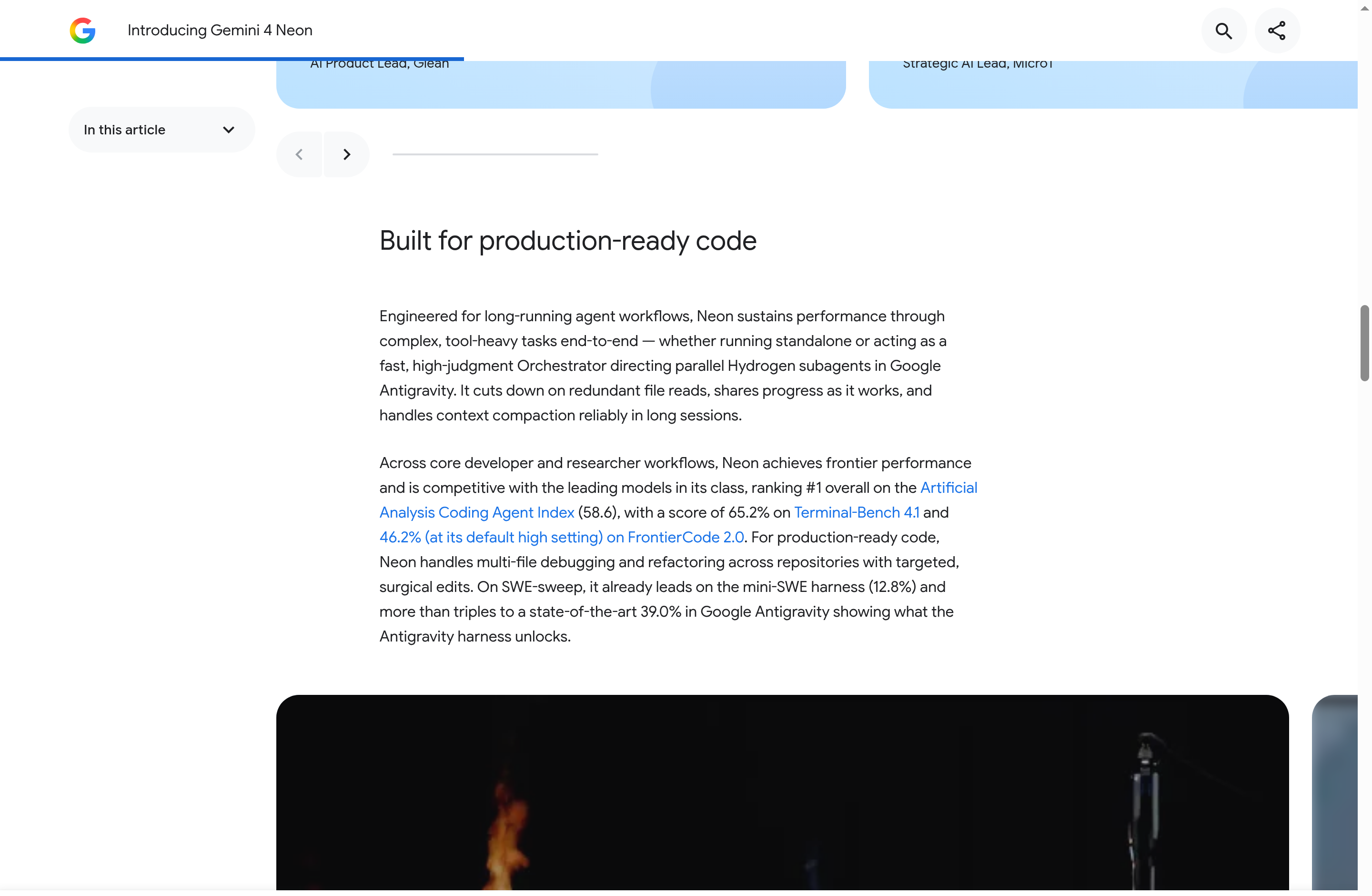
The paragraph where Google reports both numbers, three lines apart. Screenshot: Google.
Microsoft’s VS Code blog, the same day, reports that its shared Copilot harness used 14.2% fewer tokens per active device and 9.6% lower estimated processing cost than its own previous editor-specific harness, in a Business and Enterprise rollout comparison. It also found fewer errors and interruptions on long coding tasks.
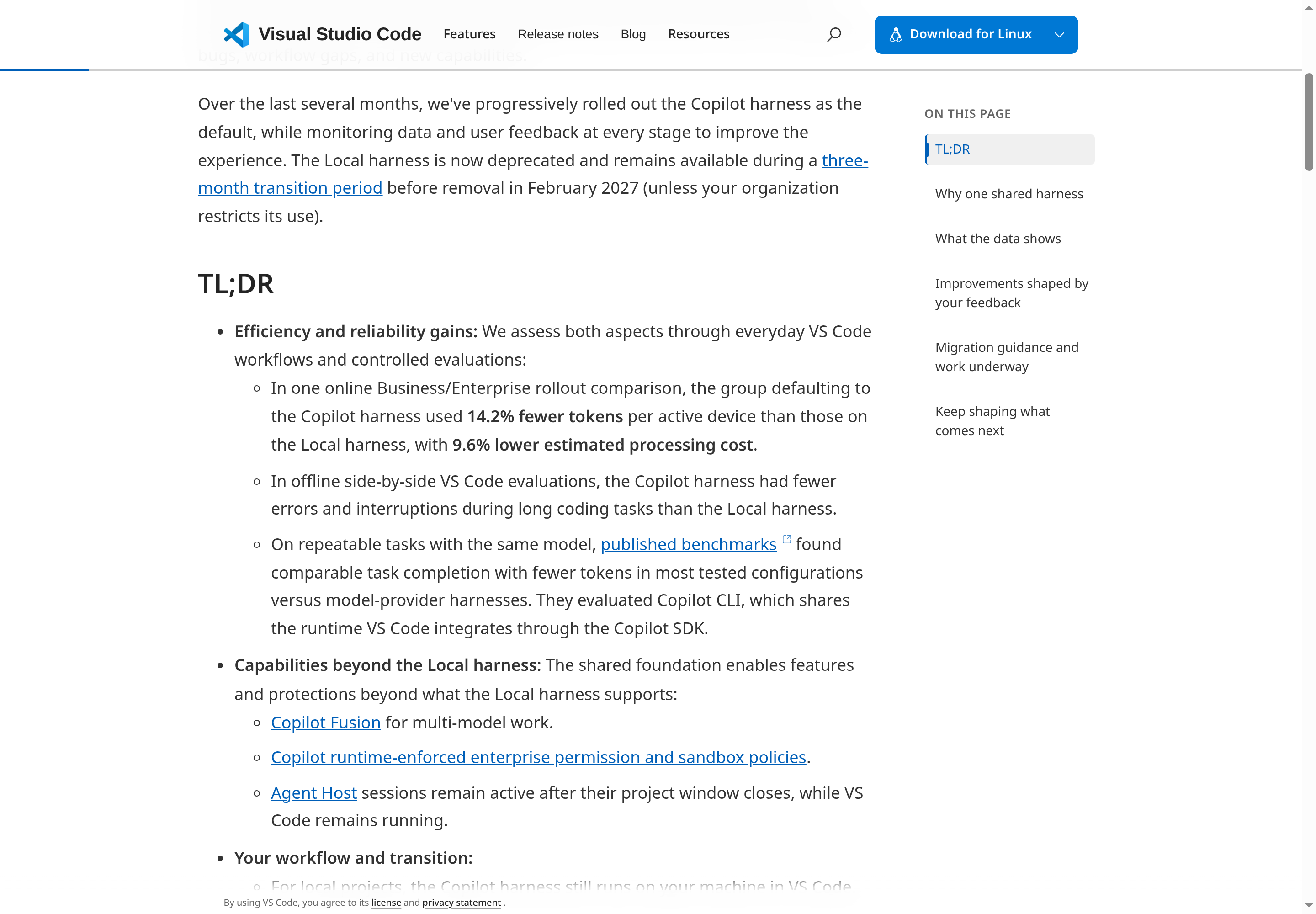
Microsoft’s own summary, including the deprecation of the Local harness and its February 2027 removal. Screenshot: Visual Studio Code blog.
What a harness actually is
Microsoft’s post defines it better than any marketing page would:
“An agent harness supplies context and tools, coordinates actions such as edits and tests, and returns results to the model.”
That is the loop, the tool wiring, the permission model, the context assembly and the retry behaviour. It is not the model, and until this year it was the part nobody sold.
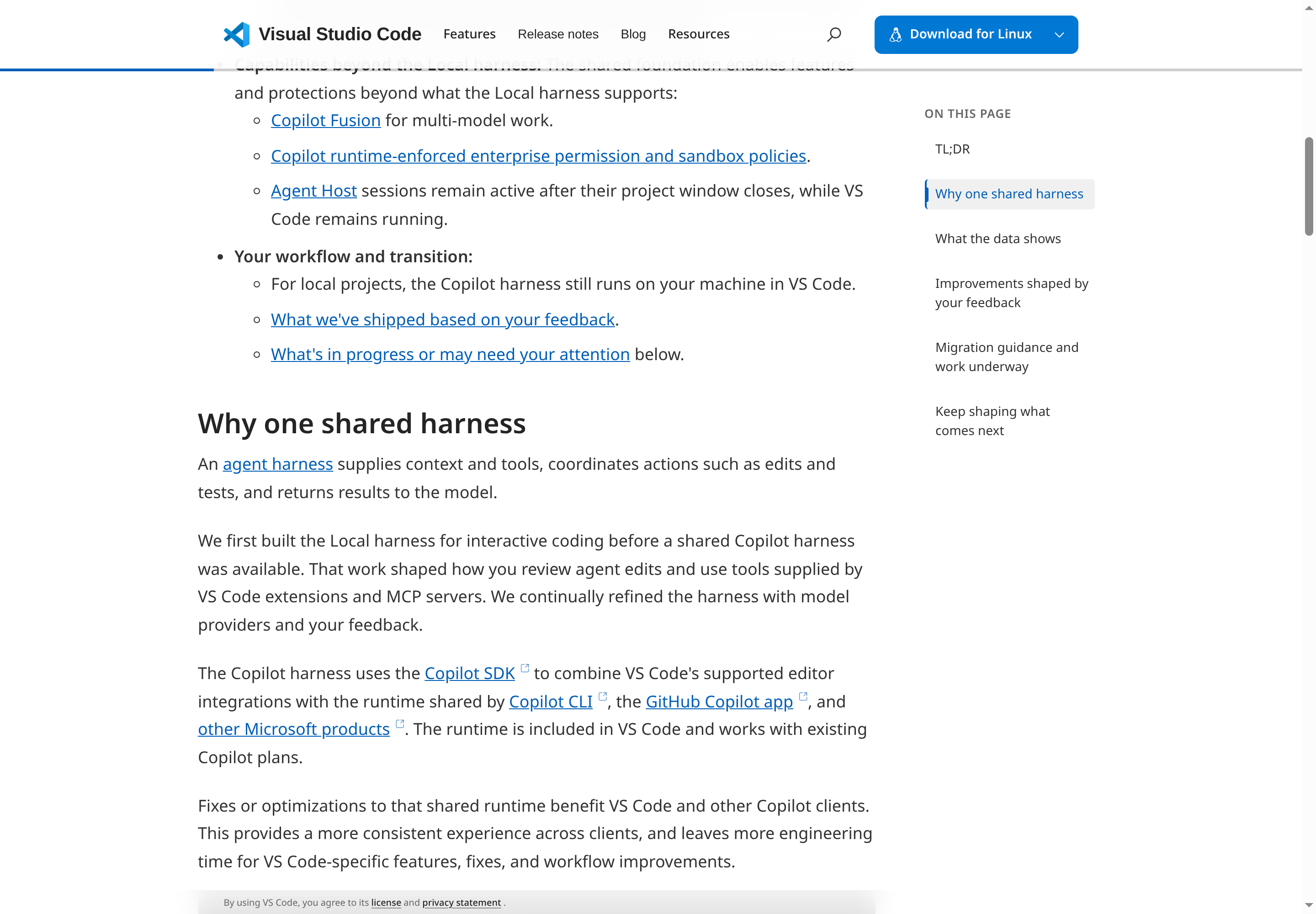
The definition, in the “Why one shared harness” section. Screenshot: Visual Studio Code blog.
Microsoft’s version is consolidation
The Copilot harness, built on the Copilot SDK, is now the default for new agent sessions in VS Code. The old Local harness is deprecated and disappears in February 2027. The same runtime serves VS Code, Copilot CLI, the GitHub Copilot app and other Microsoft products, so a fix lands everywhere at once.
The interesting part is what the shared runtime enabled: Copilot Fusion for multi-model work, permission and sandbox policies enforced by the runtime rather than by the editor, and Agent Host sessions that keep running after you close the window.
Its CLI face is GitHub Copilot CLI, which ships GitHub’s MCP server by default, previews every action before execution, and defaults to Claude Sonnet 4.5.
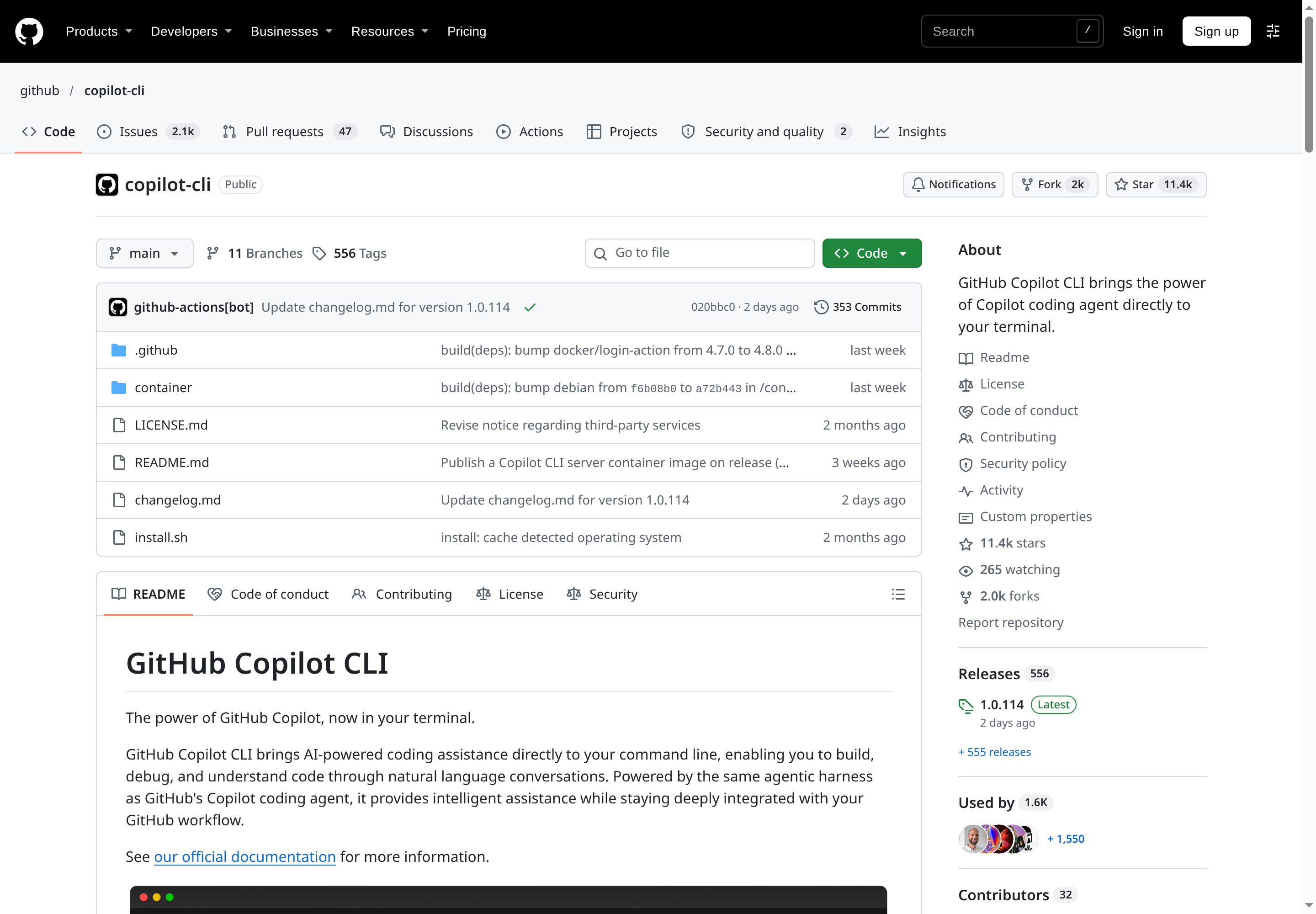
The GitHub Copilot CLI repository, which is explicit that it runs on the same agentic harness as the hosted agent. Screenshot: GitHub.
Google’s version is delivery
Antigravity CLI is the terminal surface for Google’s agents, and the same primitives are all there: parallel subagents with a /agents panel, ctrl+k tool approvals, slash commands that reach MCP servers, plugins, skills and hooks, an ACP server for other clients to drive it, and print mode with structured output.
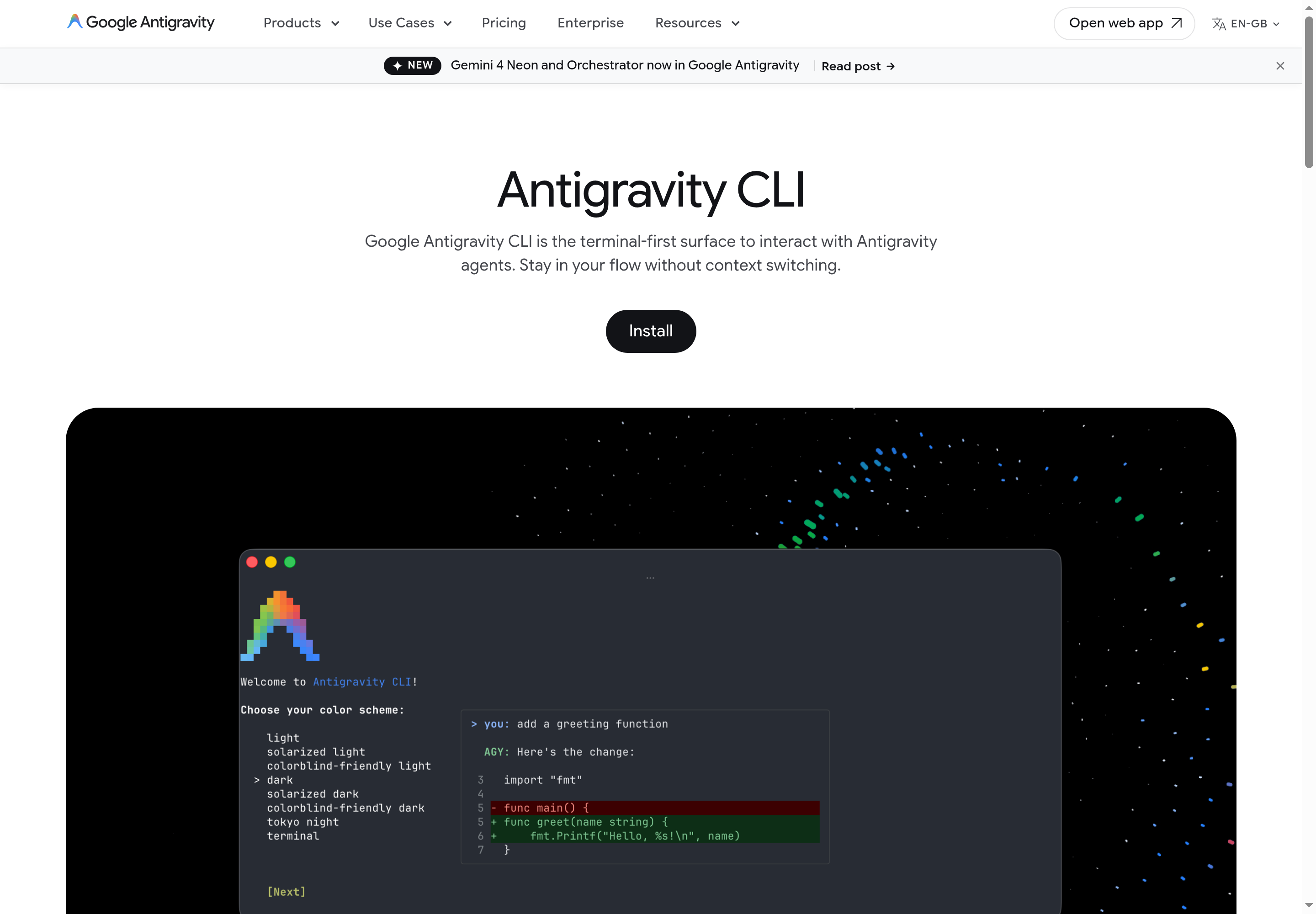
The Antigravity CLI product page. Screenshot: Google.
Where Microsoft argues about cost, Google argues about capability, and each is measuring what flatters its own product. Token efficiency is a fair claim for a company selling seats on a shared runtime. A 26-point benchmark jump from scaffolding is a fair claim for a company selling a specific model inside its own harness.
Why both are true
Neither number is dishonest and neither is a controlled experiment.
Microsoft’s comparison is an online rollout against its own previous harness, not against a competitor. Google’s 39.0% is its model inside its harness on a benchmark it selected, and the 12.8% baseline is a deliberately minimal scaffold. Both say the same structural thing: the delta between a good loop and a bad one is now larger than the delta between last year’s model and this year’s.
That has a consequence for anyone running models locally. If a harness can move a score by 26 points, then a 27B model with decent tooling, context management and retries can beat a much larger model behind a naive wrapper. The GPU is not the only variable, and for many tasks it is no longer the most important one.
Both vendors have also made the harness something you cannot own: Copilot CLI needs a Copilot subscription and can be switched off by an org admin, and Antigravity CLI is closed source and asks for broad Google Cloud scope on sign-in. The scaffolding that matters most is, for now, rented.
Sources: VS Code: the Copilot harness - Google: introducing Gemini 4 Neon - Antigravity CLI - GitHub Copilot CLI
Related on this site: Microsoft demos Hermes at Ignite without announcing it
Discussion
Be the first to commentStart a discussion
Got a take on this, a rig to show off, or a benchmark that says otherwise? Sign up and start the thread - your comment publishes instantly once you're in.