TLDR
A PCIe x1 slot runs Qwen3-8B at 56 tokens per second, the same speed as an x16 slot, with an eight second model load as the only cost. Pooled with a 64GB mining card, two mismatched GPUs held a 120B model at 91 tokens per second with the narrow link only 10 percent busy. Spilling the same model to system RAM managed 52.
The slot was never the constraint. Capacity is.
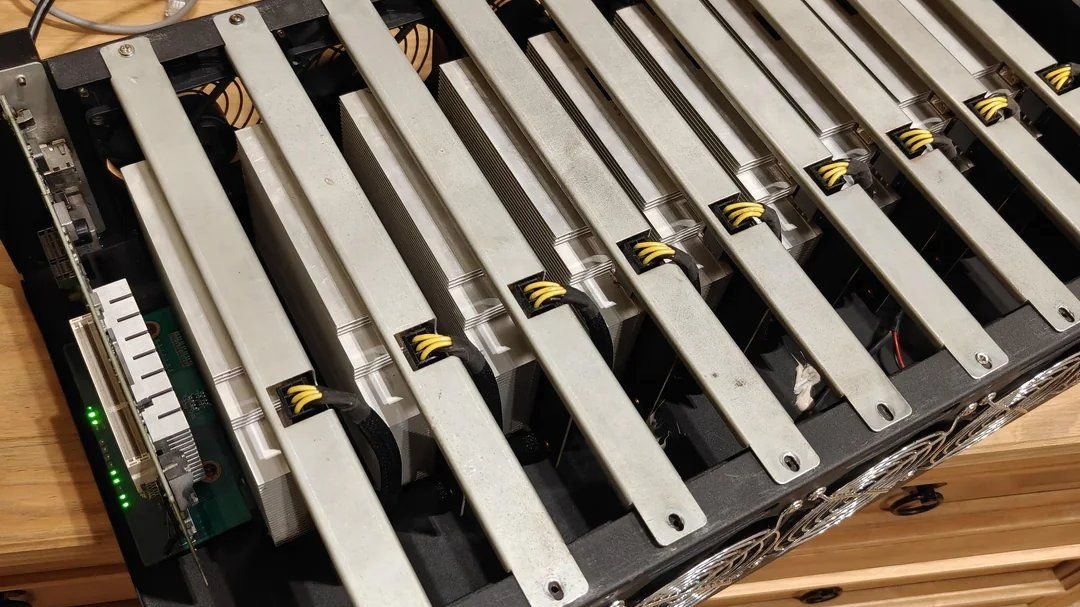
Caption: An open mining frame holding nine graphics cards, the layout a PCIe x1 riser build starts from. The test rig reused a frame like this one with a CMP 170HX, a Quadro RTX 4000 and a GTX 1660. Photo: markpronkin on Reddit, via Tom’s Hardware.
The single card test
Caveman Tech put a Quadro RTX 4000 on a PCIe x1 riser instead of a proper x16 connector and ran Qwen3-8B. Output speed was 56 tokens per second, identical to what the card does in a full slot. The only measurable difference was an eight second model load. Software and hardware tuning took it further, to 96 tokens per second.
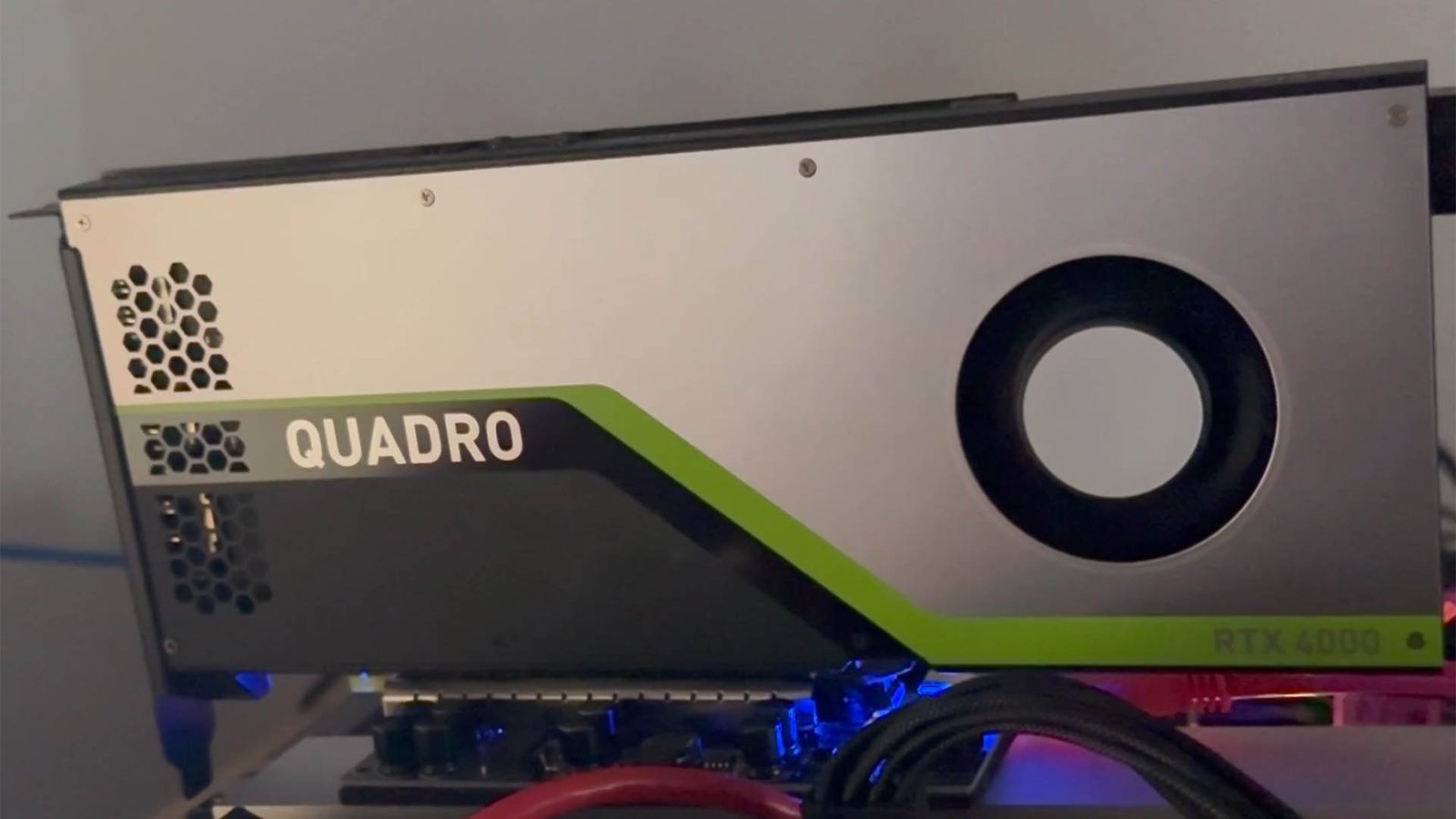
Caption: The Quadro RTX 4000 mounted in the mining rig, lit by the blue lighting that runs along the frame. Its 8GB is the second pool of VRAM in the three card test. Photo: WCCFtech, from the Caveman Tech test rig.
That should not be surprising once you look at what inference actually moves. A model resident in VRAM reads its weights from local memory. The slot carries prompts in and tokens out, which is kilobytes per request, not gigabytes per second. The high bandwidth of an x16 link is for feeding weights into the card once, at load time, which is exactly the eight seconds the test measured.
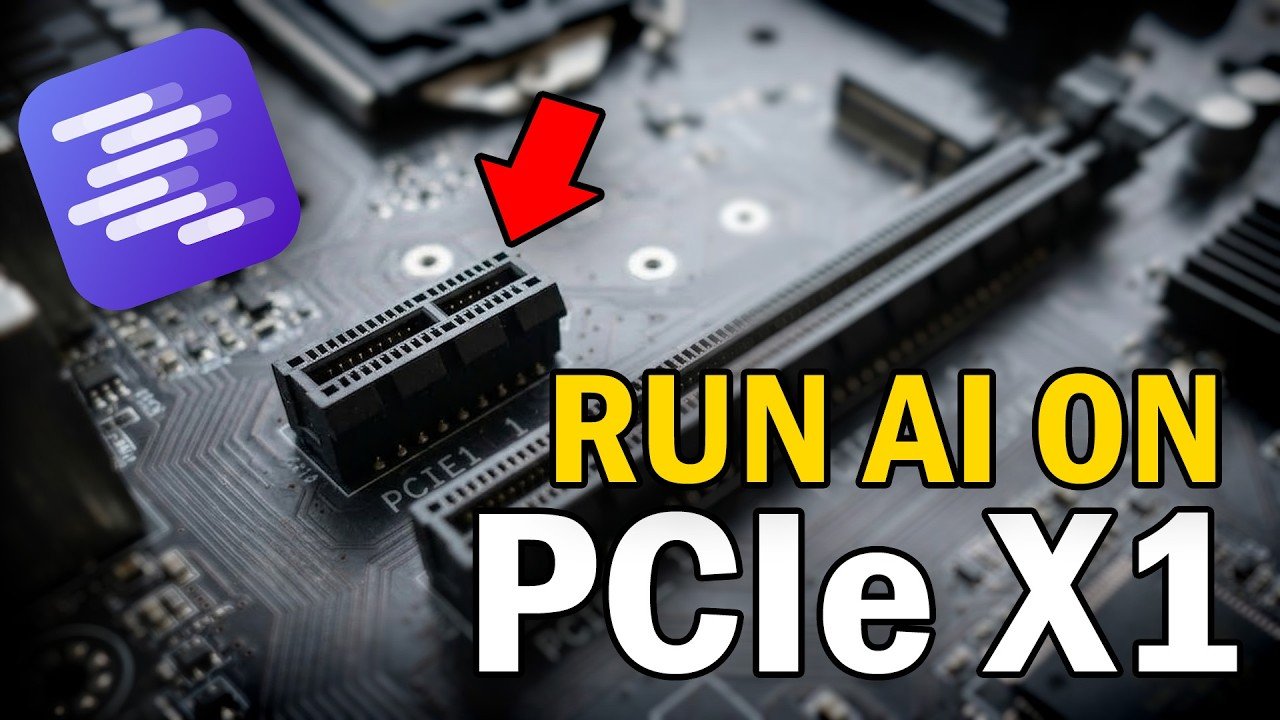
Caption: A PCIe x1 slot on a desktop board, the connector the test used in place of the longer x16 slot above it. It carries one lane and still returned full generation speed. Video thumbnail: Red Stapler, Can you run Local AI on PCIe x1 Slot?
The three card test
The harder question is whether cards can talk to each other over a narrow link, since multi-GPU inference has a reputation for needing interconnect.
The rig put a CMP 170HX, a 64GB mining card, in the x16 slot and the 8GB Quadro on x1, pooling 72GB. The model was GPT-OSS-120B. With layer splitting, where each card owns a contiguous block of layers and passes only the result of its calculation to the next, generation went from 121 tokens per second on the 170HX alone to 91 across both cards. The x1 link sat at 10 percent busy.
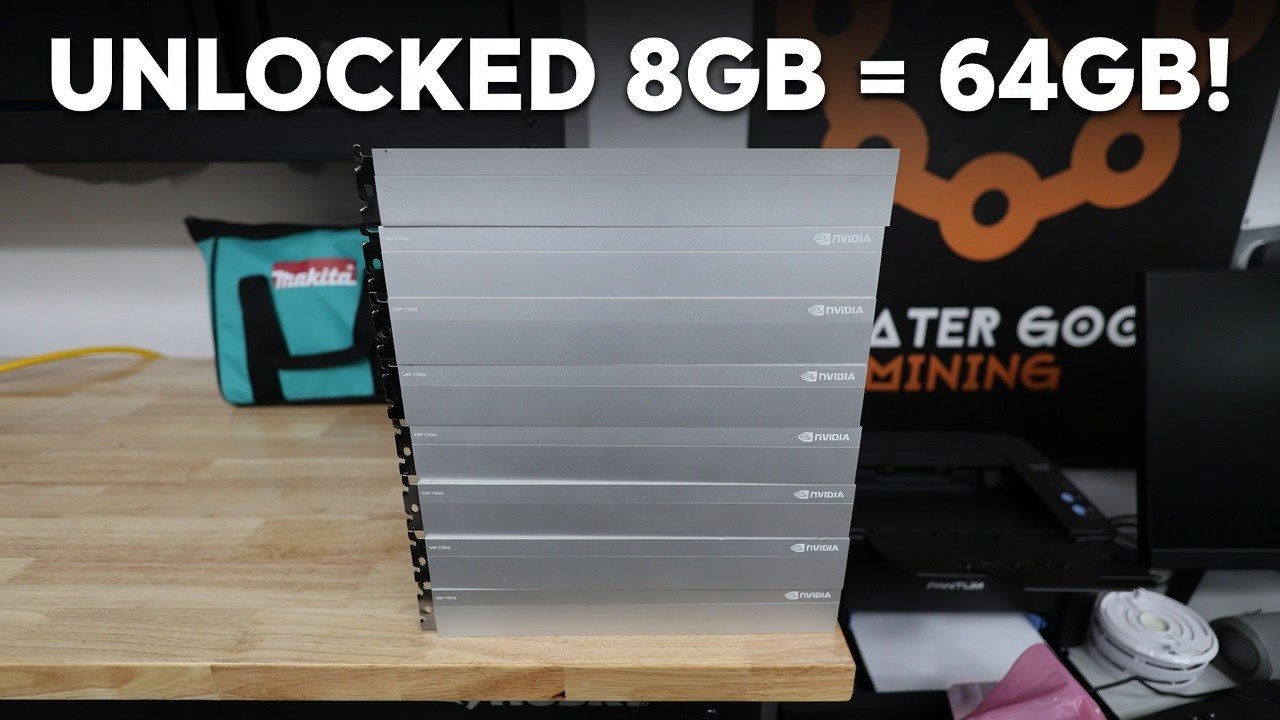
Caption: Nine CMP 170HX mining cards stacked on a bench. The card shipped with 8GB and is unlocked to 64GB, and one of them carried the 120B model here. Video thumbnail: Red Panda Mining, I Can’t Believe the 170HX Can Do THIS Now!
Ten percent. The narrowest slot in a desktop, running a 120B model, with most of its bandwidth idle.
That is the mechanism worth understanding: layer splitting passes activations, which are small, not weights, which are enormous. The cards are not sharing a model so much as taking turns holding it.
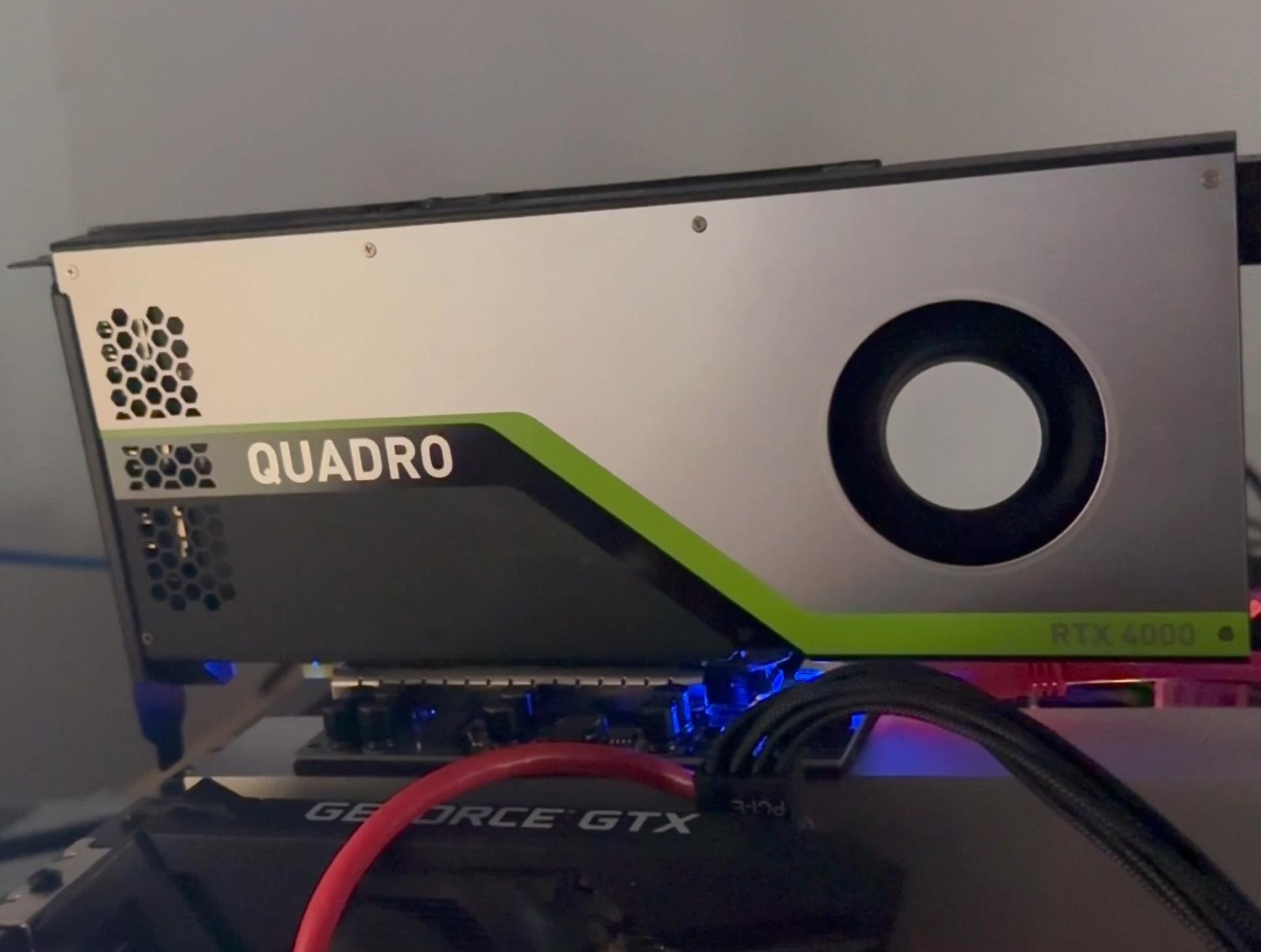
Caption: The Quadro RTX 4000 sitting above a GeForce GTX card on the same rig, joined through a red PCIe x1 riser cable. Every byte between cards went through the CPU, since the boards do not do peer to peer. Photo: WCCFtech, from the Caveman Tech test rig.
Where the narrow slot does cost you
Tensor parallelism is the aggressive option. All cards work on every layer, and weights plus KV cache get split. That reached 101 tokens per second, faster than layer splitting, but prompt reading fell from 1,113 tokens per second to 671 and the link went from 10 percent busy to 45.
If you are generating chat replies, tensor mode wins. If you are pasting a long document and waiting for prefill, it loses by a wide margin, and the difference grows with the size of the prompt.
The other comparison is the one that matters for anyone deciding what to buy. Letting the model spill into system RAM instead of using a second card gave 52 tokens per second, less than half of the 91 achieved across two cards on mismatched slots.
What this means if you are building
The instinct when a model does not fit is to buy a bigger card. This measurement suggests a cheaper move first: add capacity, not bandwidth. A second card on a riser, even one that cannot negotiate more than a single lane, gets you the VRAM and keeps the speed, because the work that needs bandwidth happens once at load rather than on every token.
Two caveats to carry with it.
First, these are one person’s measurements published to social media, not a lab result. Sample size is one machine, the harness is not described in enough detail to reproduce exactly, and nobody has replicated it. Treat the direction as informative and the specific numbers as provisional.
Second, the cards in the test are awkward. A CMP 170HX is a mining part with no display output and narrow driver support, and it is not a card to build around unless you enjoy that kind of work. The Quadro RTX 4000 is old and cheap, which is the actual point: the value is in the VRAM you already have or can buy used, not in the interconnect.
The practical version is duller than the headline. Before you spend on a bigger GPU, check whether a second cheap card fits your case and whether your harness does layer splitting. On these numbers, that is most of the way to a 120B model for the price of a riser and a used card.
Discussion
Be the first to commentStart a discussion
Got a take on this, a rig to show off, or a benchmark that says otherwise? Sign up and start the thread - your comment publishes instantly once you're in.