A new agent harness shipped this week called M3 Code, and it is built around one promise: nothing leaves your machine except the traffic you asked for.
It is a fork of T3 Code, updated daily, and it does not disable the telemetry, it deletes it. No PostHog, no Axiom, no OpenTelemetry export, no install IDs, no distinct_id, no device fingerprints. The README is unusually blunt about the difference:
“Every telemetry, analytics, tracing and identity-collection pipeline has been deleted from the code, not merely disabled, there is no flag that turns any of it back on.”
M3 Code, a fork of T3 Code. Image: MiaAI-Lab.
What it does for local models
This is where the fork earns its keep, and it is not cosmetic.
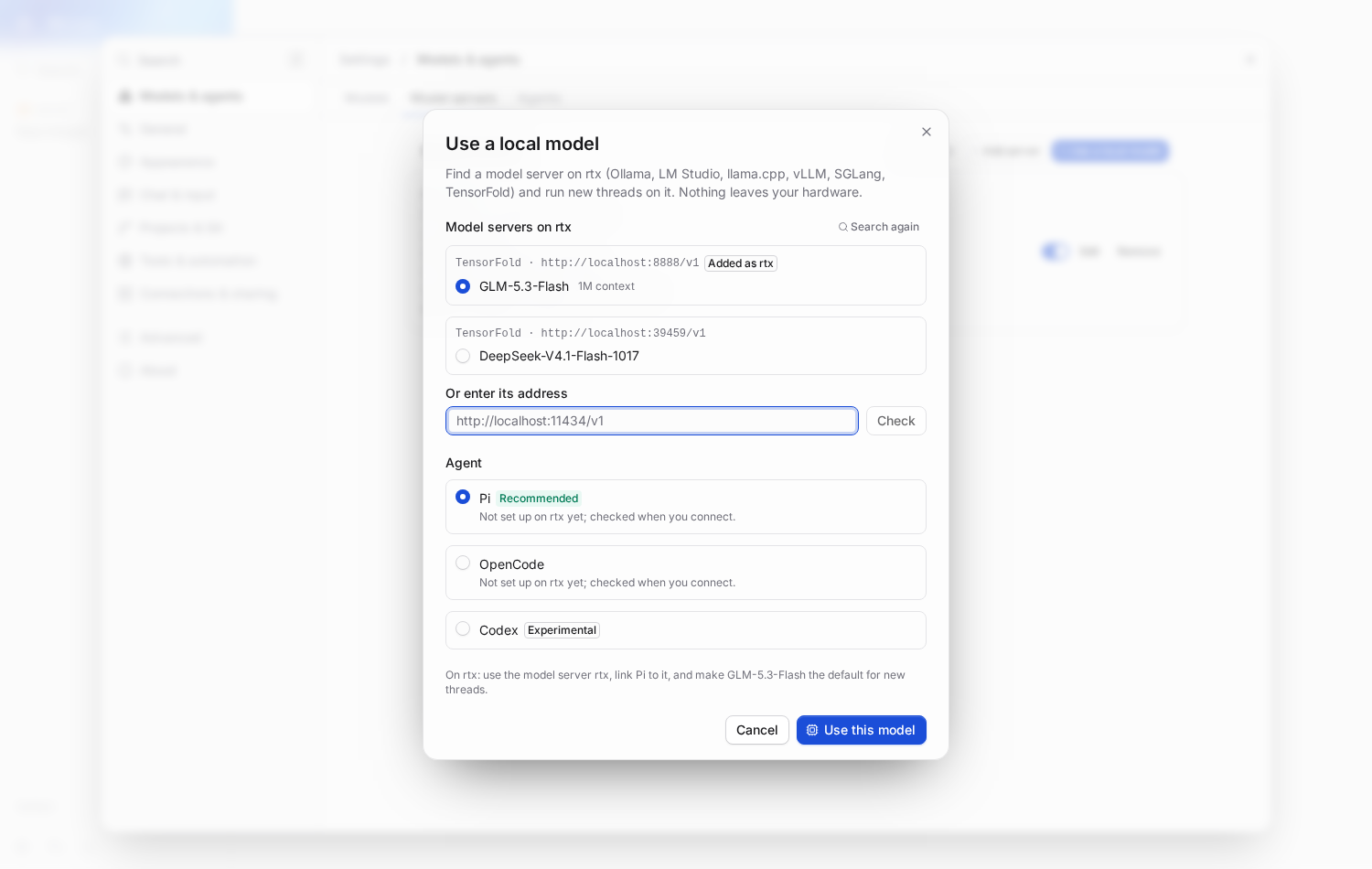
The “Use a local model” dialog: search Hugging Face, point at a server, or register an endpoint by address. Screenshot: MiaAI-Lab.
You can mark a provider instance as local, and local instances sort to the top of the model picker. The harness ships a rule they call “Never quietly cloud”: local-only survives even before you have configured a local model, and a Codex instance linked to a server waits for that server rather than falling back to your OpenAI login.
That last behaviour is the one worth having. Most tools degrade gracefully, which in practice means they silently call the cloud when your local endpoint is down and you find out from the bill.
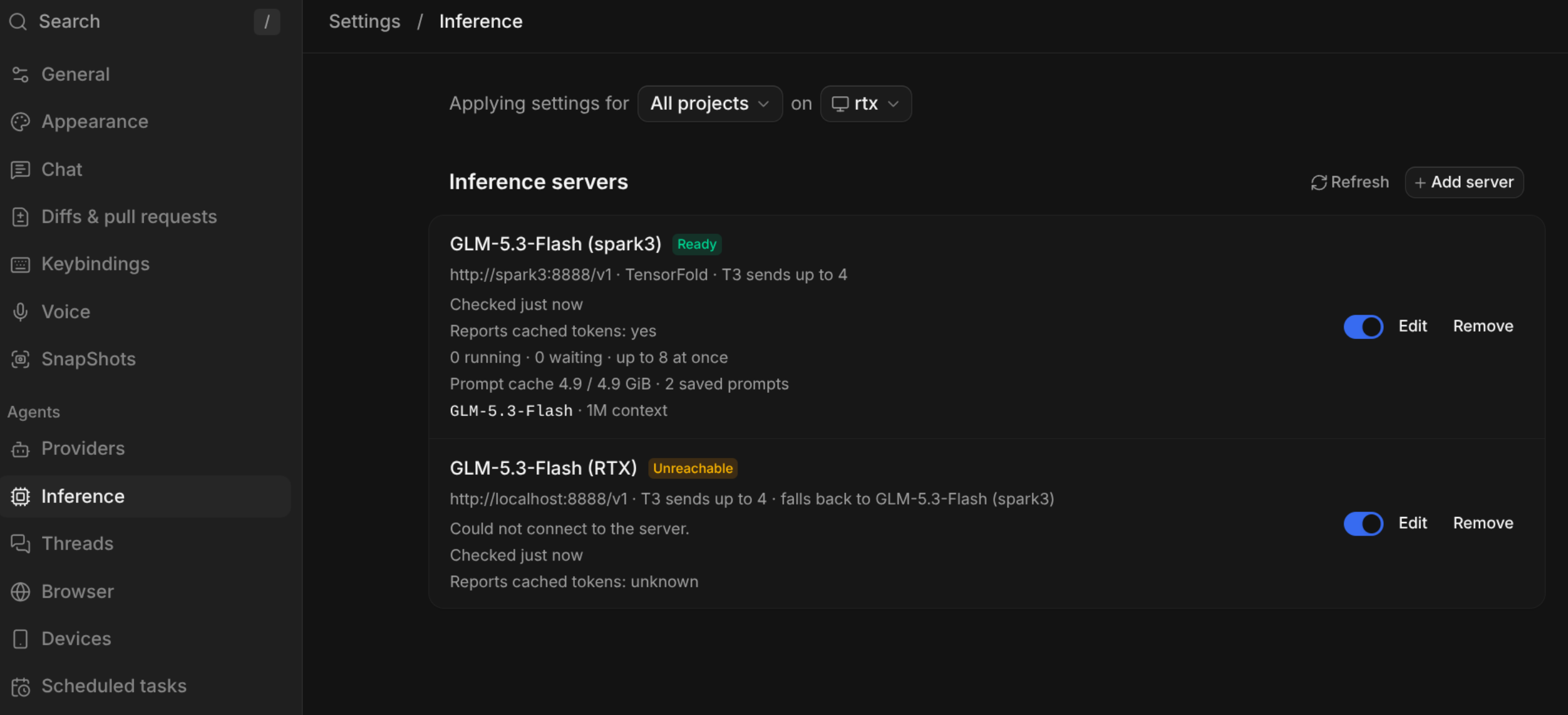
Inference servers, with a local GLM build listed beside its health check and reported throughput. Screenshot: MiaAI-Lab.
The context it came from
The reason this exists is worth stating, because it is checkable and it is not gossip. T3 Code’s own telemetry documentation says the server sends usage events to ingest.t3.codes with hashed account identifiers for your T3, OpenAI and Claude accounts when you are signed in, and forwards them to PostHog.
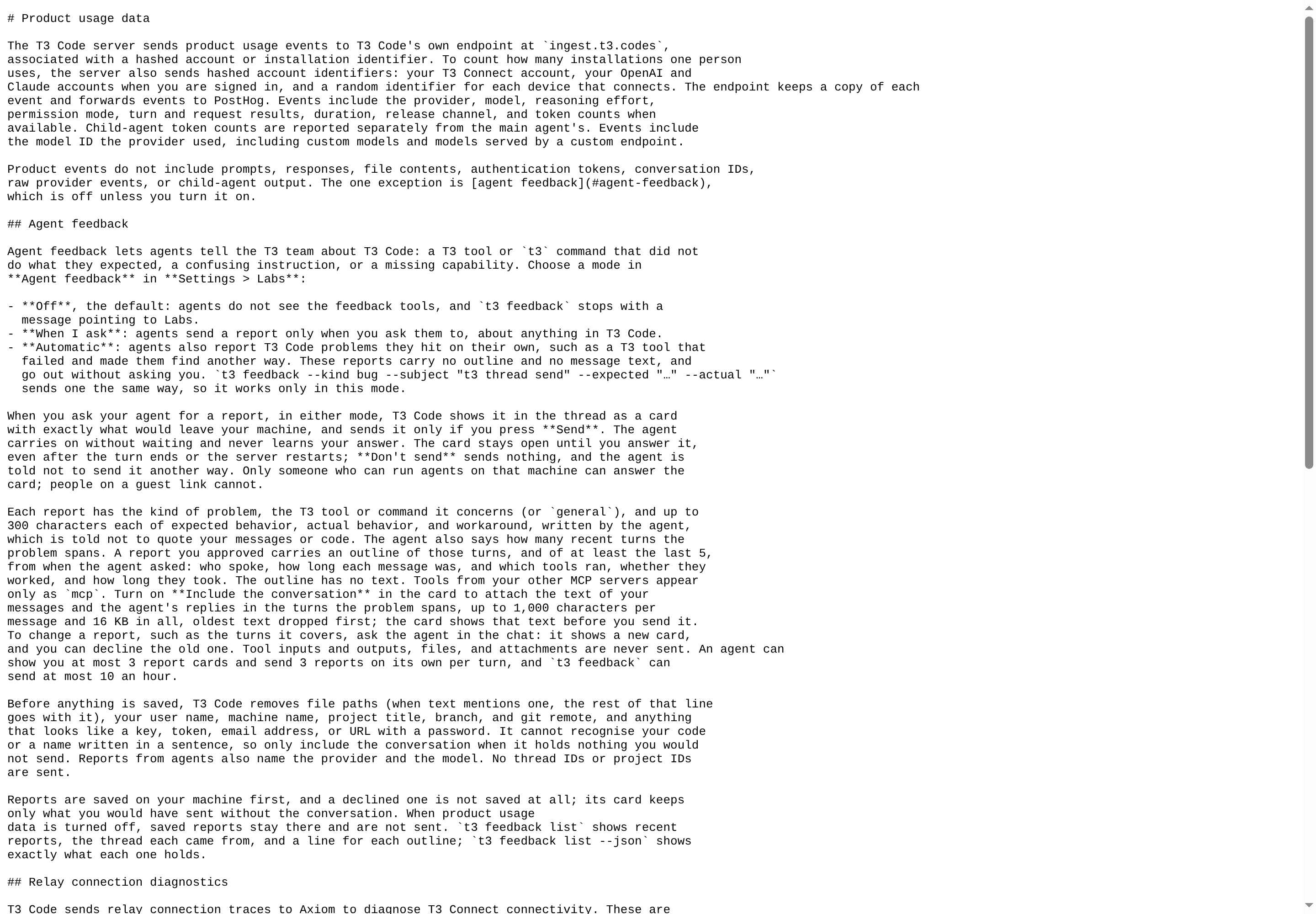
The upstream documentation, in its first paragraph. Screenshot: GitHub.
To be fair to the upstream project: it does not send prompts, responses, file contents or auth tokens, and there is an environment variable that turns product events off. Hashing an account ID is a defensible way to count installs. It is still an identifier tied to your Claude account, and wanting it gone is a reasonable thing to want.
The polish is real
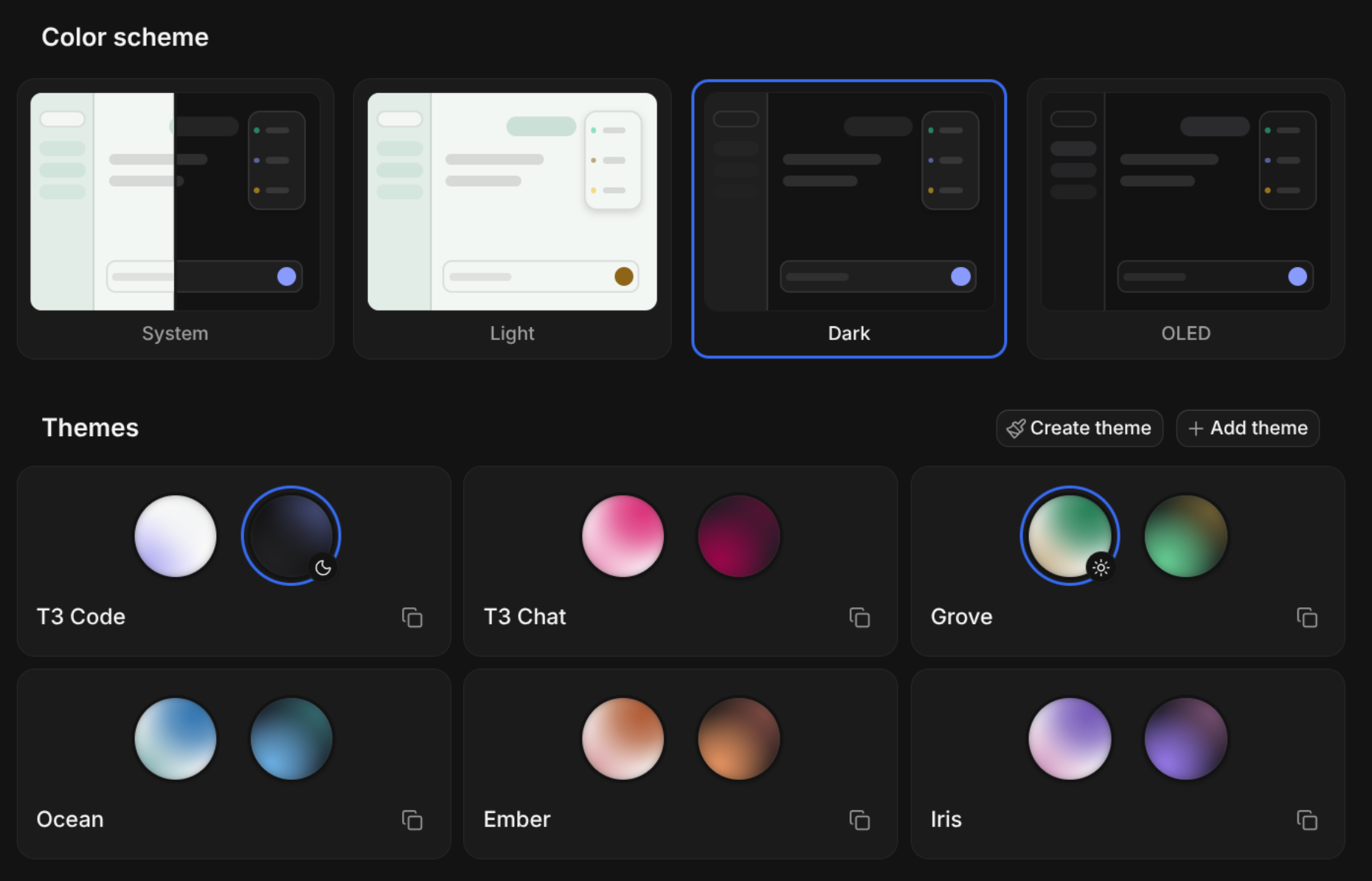
Appearance settings, including an OLED theme and named palettes. Screenshot: MiaAI-Lab.
Themes, keybindings, scheduled tasks, diffs, voice, browser and a skill picker are all present. This is not a one-weekend strip-down; it inherits a complete agent workspace and then removes the parts that phone home. The fork also publishes docs/user/network-calls.md, a plain list of every outbound request it still makes, which is the sort of document most projects would rather not write.
What to keep in mind
Verify the fork, don’t take the word for it. “Deleted, not disabled” is a claim about source, and the source is public. A daily-updating repository is also a moving target, so if this matters to you, pin a commit.
It is early. A fork maintained by a small team, tracking an upstream that moves fast, is a maintenance bet as much as a privacy one.
The defaults are the feature. Local models first, no quiet fallback, no telemetry. Everything else is a harness you could get elsewhere.
Sources: M3 Code - T3 Code telemetry documentation - the announcement
Related on this site: What open weights means when you already know open source
Discussion
Be the first to commentStart a discussion
Got a take on this, a rig to show off, or a benchmark that says otherwise? Sign up and start the thread - your comment publishes instantly once you're in.