The v0.9.0 release of PS5LM shipped October 16: llama.cpp running on a jailbroken PlayStation 5’s RDNA 2 GPU, serving OpenAI and Anthropic APIs to the home network. Mert Cobanov’s project (GPL-3.0, 358 stars) runs Qwen 3.5 9B at 55 tokens a second with a 64k context, and Qwen 3.8 27B at about 20 tokens a second at 2-bit, with 11.4 GB of the console’s 16 GB GDDR6 available for model and context. All numbers are vendor-measured on the console.
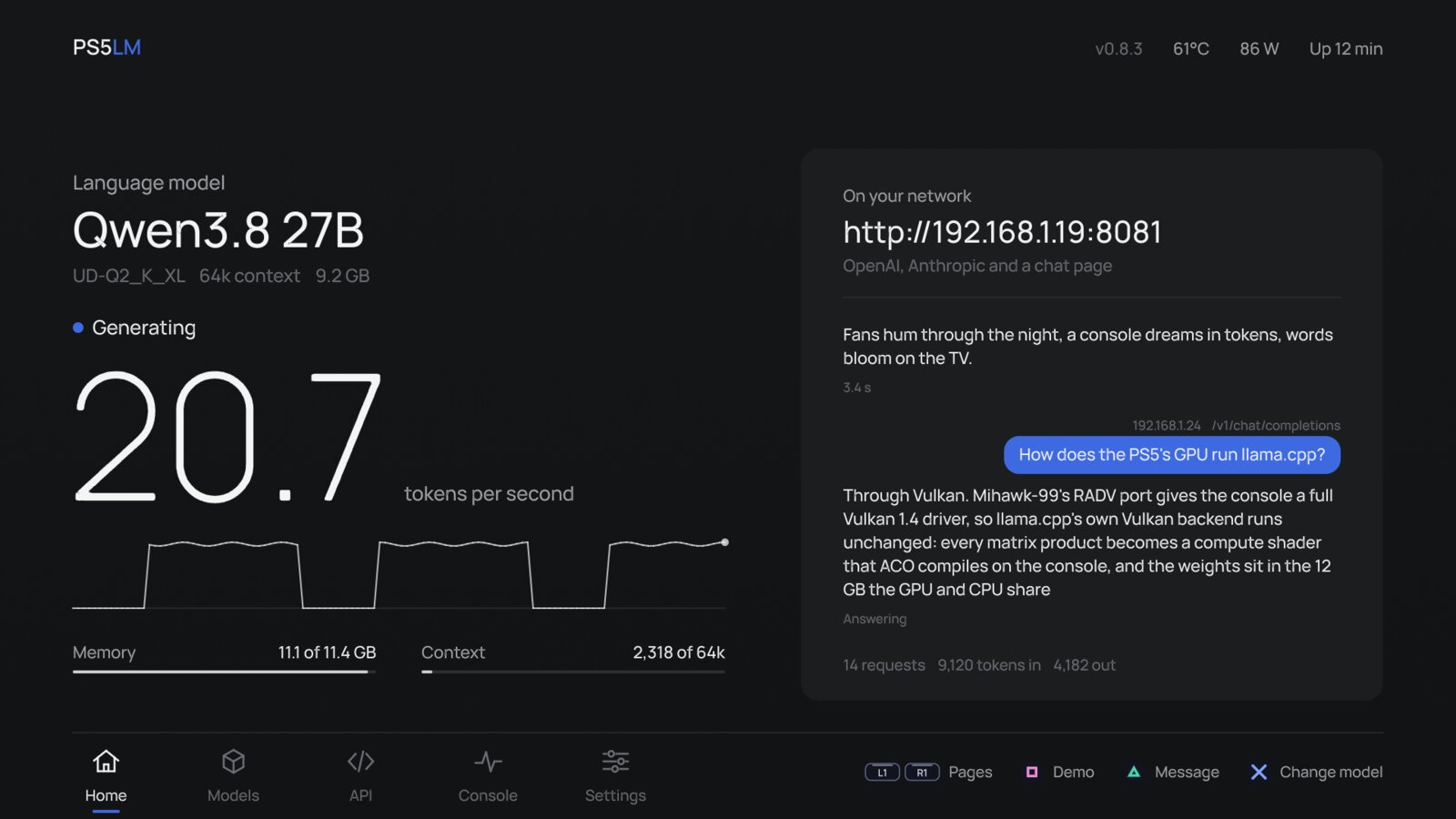
The interesting question for this site is not whether a game console can run a language model. It is what the measurement does to the budget-rig ladder: Tokenstead’s build catalog starts at $3,000, and PS5LM’s hardware costs nothing new at all for anyone who already owns the console.
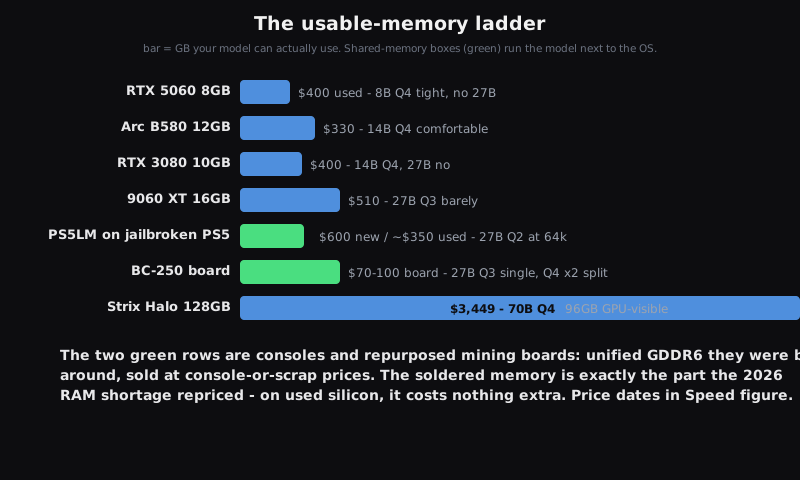
What fits per box: usable model-side memory bar in GB. The green rows are unified-memory boxes at console and scrap prices: the jailbroken PS5 at 11.4 GB usable and the BC-250 mining board at 16 GB. Sourced October 16, 2026.
The PS5 as a model server
The mechanics, from the project’s own porting notes: Sony’s SDK presents the console as FreeBSD on x86_64 (clang target x86_64-sie-ps5), ggml and libllama build nearly unmodified, and the GPU side runs through llama.cpp’s Vulkan backend on RADV, the open Mesa driver, ported to the PS5 GPU by mihawk-99’s PS5_Vulkan. The console’s 16 GB of GDDR6 is shared between CPU and GPU; about 11.4 GB is usable. Bandwidth is 448 GB/s, and the 9B model reads weights at about 70% of that, which is where the 55 tok/s figure comes from.
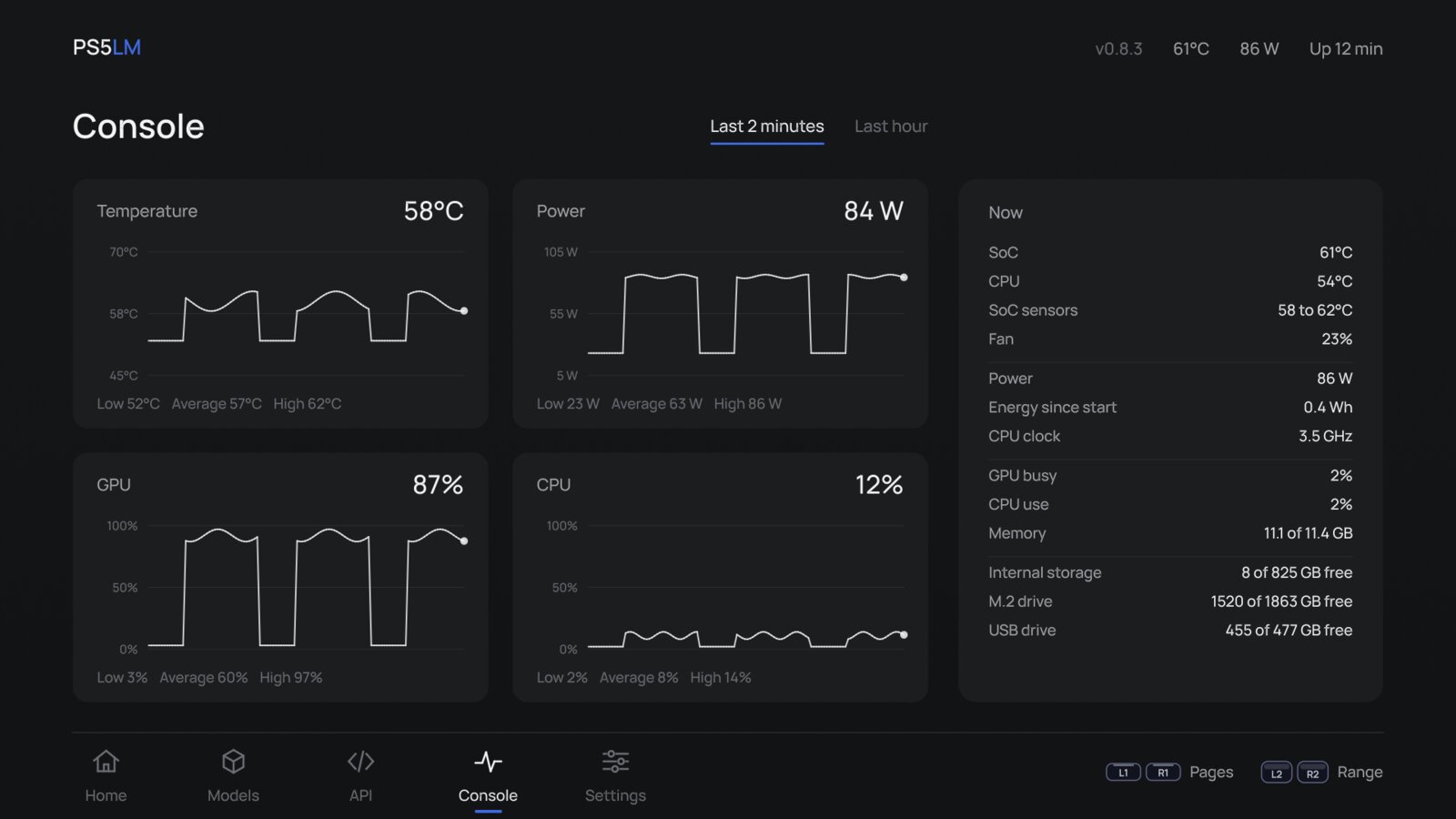
The constraint is the jailbreak, not the hardware. The Relapse exploit (public September 29) covers firmware 7.00 through 13.60; Sony shipped 14.00 on September 16, and consoles on 14.00 are not covered. New consoles ship on 14.00 or later, so the jailbreak window applies to consoles already on old firmware or updated before mid-September. A used PS5 buys hardware at $300 to $400, but only with the right firmware still on it. Relapse is a payload: it must be re-run after every reboot, which matters if the plan is an always-on model server under the TV.
The BC-250: the same silicon at scrap prices
The deeper cut is ASRock’s BC-250, the ex-cryptocurrency-mining board built around cut-down PS5-class silicon (Cyan Skillfish APU, Zen 2 cores, RDNA 2 GPU with 24 of 40 compute units enabled, 16 GB unified GDDR6). ASRock sold 4U servers stuffed with twelve of them per rack; when mining stopped paying, the boards hit the secondhand market.
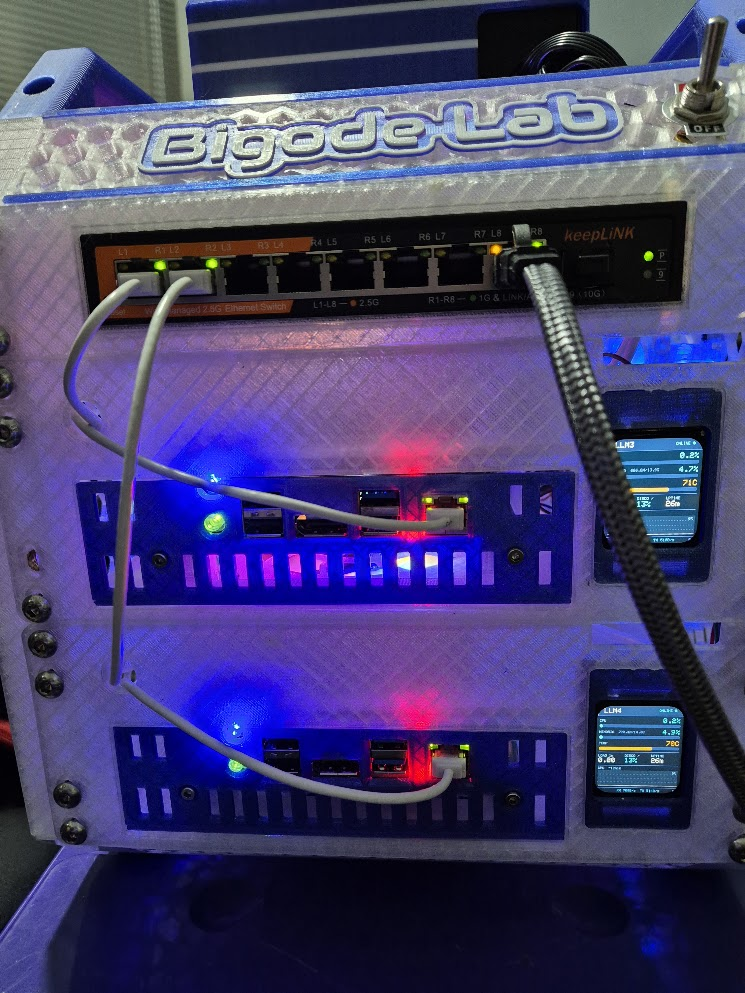
The verified numbers come from wdonega’s bc250-llm-setup repository (measured September 14, 2026, llama.cpp with Vulkan): Qwen 3.8 27B at 14.65 tokens a second on a single board (Q3 quant, 8k context), and 16.18 tokens a second split across two boards over 2.5GbE with the roomier Q4 quant. The split is worth reading twice: two $85 boards beat one board not because Ethernet is fast but because each board only holds half a better model. A kernel patch re-enables all 40 compute units (more than the PS5’s 36) at a power bump from 95 W to 125 W per board.
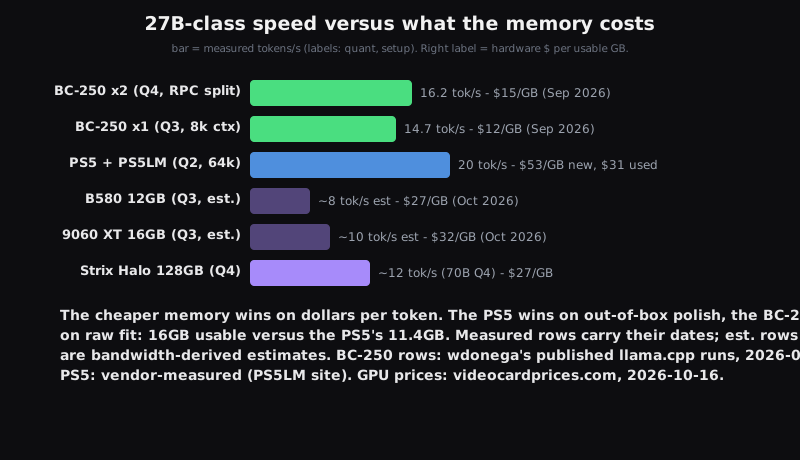
27B-class generation speed versus dollars per usable GB of memory. BC-250 rows are community-measured (September 14, 2026); the PS5 row is vendor-measured; the Strix Halo row is a community-reported 70B figure. Prices dated in the caption of each row’s source.
Where each box lands
The decision ladder falls out of the price and memory table directly.
-
Own a jailbroken PS5 already: the free tier. PS5LM v0.9.0 makes it a 55 tok/s 9B server with vision APIs and decision-model support tonight.
-
Buying a console used ($300-400): the compromise tier. Works only on firmware 13.60 or lower, and the firmware clock is the risk.
-
The BC-250 path ($70-100 board, roughly $150-250 built with PSU, cooling, and case): the actual budget rig. Sixteen usable gigabytes, Vulkan llama.cpp, community scripts end to end. The costs: Linux comfort, a BIOS flash, and the honesty in bc250.info’s guide that there are no tokens-per-second guarantees on every configuration.
-
Strix Halo 128GB ($3,449+ as of September 2026, up from about $1,499 at launch): the same memory shortage that pushed Sony’s console prices up $100 to $150 in April repriced soldered LPDDR5X. The ladder’s top is now more than three times its launch price.
The pattern behind the ladder: the 2026 memory shortage repriced DRAM everywhere, but GDDR6 on used console and mining silicon is already soldered. The shortage cannot touch it. That is the reason the bottom of the budget ladder is old console hardware, and the reason this site’s next build tier might start well below $3,000.
Sources: PS5LM site - cobanov/PS5LM - wdonega/bc250-llm-setup - bc250.info Local AI guide - tbreak: PS5 jailbreak reaches 13.60 - Sony blog: April 2026 price changes - videocardprices.com
Related on this site: GPU hosting for the rack you already own - The Rails benchmark: the expensive models did not win - Meta asks your birthday: the Muse Spark Open gate